What to wear dog sledding in Quebec
A sled passenger sits still in moving air, and a driver sometimes runs behind the dogs. You will probably do both inside an hour, so your clothes have to cope with each. Here is our packing list, and what every kennel does or does not hand out.
How cold the trail gets
Rough daytime highs at Mont-Tremblant sit near −7 °C (19 °F) in January and −5 °C (23 °F) in February. March creeps up to 1 °C (34 °F), when wet snow becomes the bigger nuisance.
Those are afternoon figures for an ordinary day. Cold spells reach −20 °C (−4 °F), a morning start is colder than the high, and moving air takes heat from any skin you leave bare. Pack for the cold spell and peel off a layer if it never shows up.
The month changes your suitcase more than the kennel does. Our page on when to make the trip has the temperatures and daylight from December to April.
What each kennel lends, rents or leaves out
None of the four sled rides comes with a full set of winter clothes in the price. This is what the pages for the Quebec City dog sledding trips we compared state, with the two no-dog alternatives underneath.
| Tour | Place | Provided or for rent | Yours to bring |
|---|---|---|---|
| Hot chocolate ride (1) | Mont-Tremblant | Helmet, and you have to wear it | Plan on everything else, or ask |
| Valley Adventure (2) | Nominingue | Boots and warm clothing can be borrowed on site (GetYourGuide's page) | Base layers, socks, gloves to be safe |
| Upper Laurentians (3) | Rivière-Rouge | Clothing not included | The whole outfit, and lunch |
| Saguenay Fjord excursion (4) | Near Tadoussac | Warm clothes for $21 a person plus tax | Whatever you do not rent |
| Alternative, no dogs: snowmobile (5) | Île d'Orléans | Boots, suit, mittens and helmet included | Warm layers underneath |
| Alternative, no dogs: snowshoeing (6) | Jacques-Cartier National Park | Snowshoes included, clothing rental possible | Winter clothes and boots |
Borrowed boots come in the sizes they have that day. If someone in your party has large feet, or small ones, bring a pair from home even for Nominingue.
From the skin out
Cotton is the one fabric to leave at the hotel. It holds sweat, and on a sled you go from running to sitting within a minute.
- Thin wool or synthetic top and leggings against the skin
- Fleece or a light down jacket that fits under a shell
- Windproof jacket long enough to cover your lower back when you bend over a harness
- Snow pants, since jeans soak through when you kneel among dogs
- Insulated boots with a thick sole and room to wiggle your toes
- One warm pair of socks, not two tight ones, and a dry pair left in the car
- Thin liner gloves under warm mittens
- Thin hat or headband that fits below a helmet
- Neck tube you can pull up to your eyes, instead of a scarf with loose ends
- Ski goggles or sunglasses for wind and flying snow
The liner gloves earn their place early. You handle clips and straps when you help with the harnesses, and bare fingers on cold metal turn clumsy fast.
Dress for the seat, vent for the runners
Drivers on tours 1 and 2 sometimes run alongside the sled, and one reviewer called driving a lot of exercise. Passengers get no such help and feel the wind first. Choose layers for sitting, then open zips when it is your turn to work.
On a ride where you share the sled, that turn comes about halfway. Read who gets to drive before you pick, because a ride spent entirely in the seat calls for one layer more.
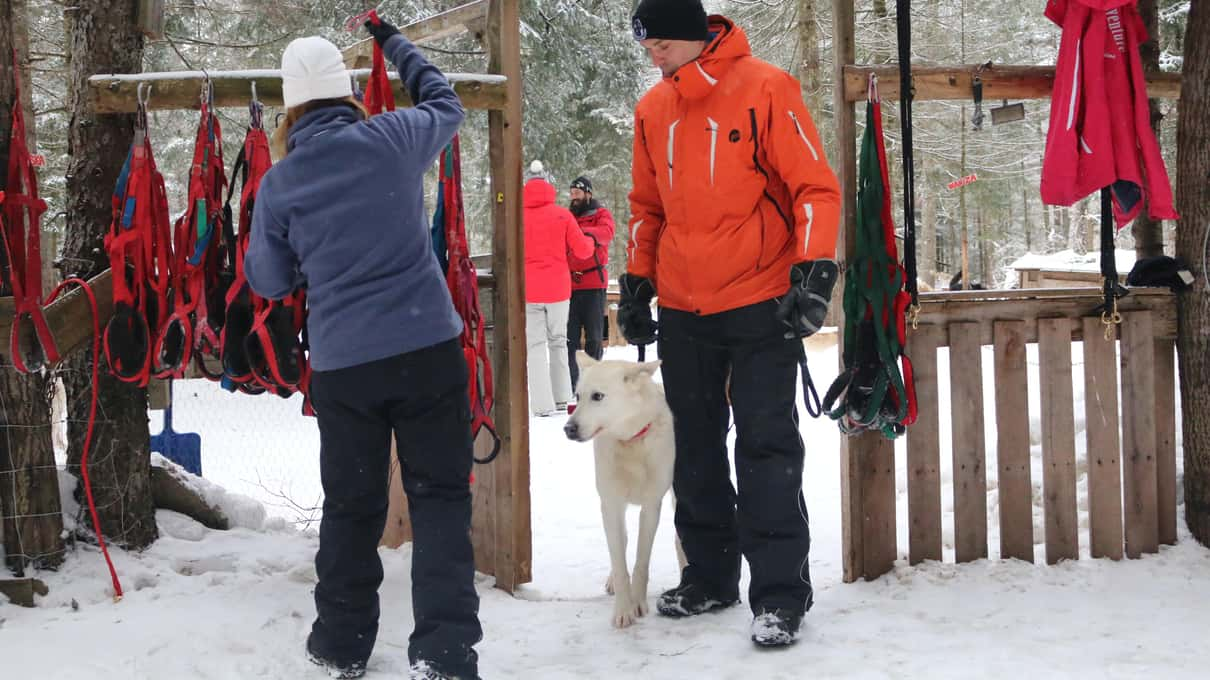
A kennel with a campfire, and no closet
The Upper Laurentians ride spends an hour on the trail, then adds a kennel visit with a campfire and crazy carpet sliding. That is plenty of time standing in snow, and neither clothing nor lunch is part of the price.
Bring the full outfit to Rivière-Rouge
The kennel is about 5 hours 15 from Quebec City, some 45 minutes beyond Mont-Tremblant, with no shuttle. A guide rides on every sled, so nobody handles the team alone.
It rates 5.0 from 19 reviews on GetYourGuide, a small sample. The tour is not suited to anyone who hoped to turn up in city shoes and be kitted out at the door.
Pack the car so the warm things come out first
The drive is 4.5 hours to Mont-Tremblant by our route planner, on dry roads, and snow adds time. Nobody sits that long in snow pants, so keep the kennel outfit in one bag on the back seat.
The Mont-Tremblant ride asks you to arrive 30 minutes early and the Tadoussac one a full hour. Use part of it to change, and leave the boots inside the heated car until then, because boots that start cold stay cold.
The same bag should hold water and a snack, plus a phone charger. Batteries fade in the cold, so carry the phone inside your jacket. Our notes on driving to the kennels cover tires and stops.
Things the dogs will find
Expect paw prints on your knees and a fair amount of hair on your sleeves. At Mont-Tremblant you brush the dogs after the run, so wear an outer layer that wipes clean and leave the pale coat for dinner.
Tuck in anything that dangles, and zip keys and cards into an inner pocket. A glove dropped from a moving team tends to stay dropped. The huskies themselves came dressed for the weather already.
Dressing a child for an hour in the seat
Children mostly ride as passengers, so dress them warmer than you dress yourself, with a spare set of everything that can get wet. Check hands and cheeks at each pause, and tell the guide early if someone has gone silent.
Ages and seats differ by kennel, and our family page sorts them out. When the bags are planned, look again at our dog sled comparison or read the tips for husky rides from Quebec City before choosing a date.